

Veterans who served in military occupations with repeated blast overpressure exposure were significantly more likely to have evidence of anger, aggression and violence documented in their medical records than veterans in lower-risk occupations, according to a new study led by researchers at the VA Salt Lake City Health Care System and the University of Utah.
MRI-Guided TMS Improves Outcomes in Combat-Related PTSD Trial
Combat-related post-traumatic stress disorder (PTSD) is one of the most difficult mental health conditions to treat among military personnel and veterans. Although trauma-focused psychotherapies help many patients recover, some continue to experience severe symptoms despite intensive treatment.
Repeated Blast Exposure Appears to Increase Brain Aneurysms in U.S. Special Operations Forces
In U.S. Special Operations Forces personnel, greater repeated blast exposure is associated with a higher prevalence of intracranial aneurysms, according to a recent study.

Expansion of Trauma Readiness Center Helps Prepare Clinicians for Combat Casualties
The Air Force recently celebrated a significant expansion of its trauma readiness center in Cincinnati. That is where military medical personnel can hone skills they’ll need to treat combat casualties.
How Did VA ED Usage for Low-Acuity Conditions Change After Virtual Care Expansion?
Low-acuity VA emergency department (ED) visits decreased rapidly with the U.S. onset of the COVID-19 pandemic in March 2020, rebounded partially after the expansion of virtual care but remained 12% below baseline by February 2023.

Non-Combat Health Threats Pose Ongoing Challenges for Military Readiness
When most people think of military casualties, combat injuries often come to mind. Yet, throughout history, the majority of threats to servicemember health have come not from the battlefield but from disease and nonbattle injuries (DNBI).
Advancing Face and Hand Transplantation: DoD and VA Lead the Way
When the Department of Defense (DoD) Reconstructive Transplant Research Program (RTRP) asked the National Academies of Sciences, Engineering, and Medicine (NASEM) to examine face and hand transplantation, it was more than just a request for a report.

Military Combatives Training Produces a High Rate of Concussions
Military servicemembers regularly participate in combatives training, participating in activities such as boxing, judo, martial arts and hand-to-hand combat, to acquire and maintain mission essential skills.
Hypocalcemia Resulting From Blood Transfusions for Traumatic Injury
The leading cause of death after trauma is hemorrhage, which usually can be managed by blood transfusions.
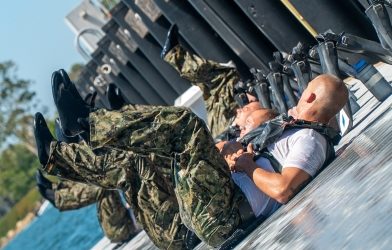
High-Speed Boat Impacts Might Pose Hidden Brain Risks for Naval Special Warfare Crewmen
For decades, chronic traumatic encephalopathy (CTE)—a devastating brain disease—has been linked primarily to contact sports like football and boxing.
Genetic, Biomarker Differences Exist in Servicemembers With mTBI History
Blast explosions in war zones are a known issue for military servicemembers, but they also regularly face blast exposures during training and operations.
Brain Trauma May Boost or Dampen Political Intensity
A new study revealed a surprising link between brain injury and political engagement.
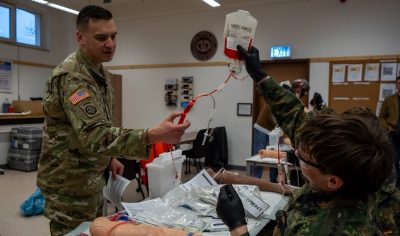
Lower Use of Low-Titer O Whole Blood for Trauma in Women of Childbearing Age
Males are more likely than females of childbearing potential to receive low-titer O whole blood during trauma resuscitation, according to a recent study, but the authors suggested the concerns leading to the differences might not be well-founded.
Hypocalcemia Resulting From Blood Transfusions for Traumatic Injury
The leading cause of death after trauma is hemorrhage, which usually can be managed by blood transfusions.
Prediction of Patient Outcomes After Severe Traumatic Brain Injury
Serum cytokines, neuronal proteins and clinical data can be used to predict vasospasm and early mortality in patients with severe traumatic brain injury, according to a recent study.
Higher Psychosocial Well-Being at Time of Trauma Reduces PTSD Risk
Victims of traumatic events with higher well-being in three areas—vocational well-being, financial well-being and social well-being—are less likely to experience post-traumatic stress disorder (PTSD), according to a recent study.
Knowing Seasonality of Wartime Wound Infections Can Aid Effective Treatment
Battlefield-related wound infections complicate recovery from combat casualties. A new study described what pathogens are more likely to cause morbidity at what times of the year to help better manage the infections.
VA Adopts New Standards for Treating Older Veterans in EDs
The VA is trying to better serve its older patient population by adopting accredited geriatric emergency departments in many agency hospitals.
New VA Therapy Reduces Pain, Disability, PTSD Symptoms Following TBI
Military servicemembers and veterans are at high risk for head injury compared with civilians. More than 369,000 U.S. veterans have at least one mild traumatic brain injury, and many report the onset or worsening of headache within three months of their injury.
MHS Researchers Found Current Antibiotic Dosing Guidelines Adequate for Critically Ill Patients With Trauma, Burn
Critical illness caused by burn and sepsis doesn’t alter how the body processes piperacillin and tazobactam (pip-tazo), an antibiotic and beta-lactamase inhibitor drug combination
Military/VA Search for New, Nonopioid Methods to Combat Chronic Pain
The last decade has seen health systems the world over shift away from using opioids for pain management. First there was the too-slow understanding that opioids are addictive and were being massively over-prescribed.
Mortality Is Higher Than Expected in Post-9/11 Veterans With TBI
In the 20th century, military servicemembers were found to be healthier than the average individual, with lower mortality rates than their U.S. civilian counterparts.
Criticism Continues About VA’s Handling of Military Sexual Trauma Claims
Has the VA improved its process of dealing with military sexual trauma, or are errors resulting in veterans being denied the care they need?
New Focus Is on Taking Care of Victims of Military Sexual Assault
As DoD officials look to make good on President Joe Biden’s promise to address sexual assault and harassment in the military, they are framing a portion of that effort in terms of a pressing public health need.

Veteran Homelessness Likely to Increase With End of Eviction Moratorium
While the last decade has seen a dramatic decrease in the number of veterans who are homeless on any given night, that trend has stalled in the last two years with numbers, even prior to the COVID-19 pandemic, starting to move upward again.
Sleep Disorders More Prevalent in Army Vs. Other Services
While sleep problems are widespread in active-duty U.S. military servicemembers, Army personnel appear to have the most problems.
Untangling the Mystery Behind Blast-Induced Neurological Complications
Explosive blasts account for a majority of the injuries among wounded servicemembers, but some of the most long-term and damaging effects of blast exposure might be slipping by undetected.
Psychologist Emphasizes Social Support’s Importance for Veterans
SAN ANTONIO—If there’s one thing that Sandra Morissette, PhD, wants people to understand about veterans is that, when it comes to the need for social support in order to heave a healthy, functional life, they are no different than their civilian counterparts. And the...
Mortality, Amputation from Critical Limb Ischemia Declining at VA
IOWA CITY, IOWA — High rates of diabetes, obesity, smoking, and other risk factors elevate veterans’ risk of peripheral artery disease (PAD) and critical limb ischemia.
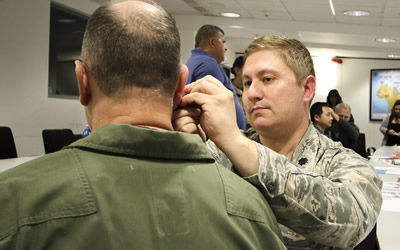
Resting, Resuming Specific Activities Enhance Servicemembers’ mTBI Recovery
Acute Period Expanded from 48 to 72 Hours After Injury SILVER SPRING, MD—Successful and speedy recovery from mild traumatic brain injury or concussion is more complex than previously thought. A pair of studies by the Defense and Veterans Brain Injury Center determined...
