
Navigating menopause with VA
If your menopause symptoms are getting in the way, we can help.
Source: Office of Women’s Health
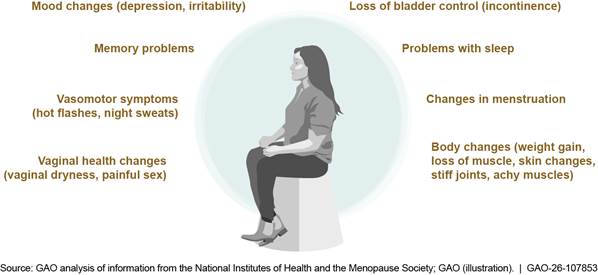
WASHINGTON, DC — Nearly half of women veterans who receive VA healthcare are at an age when menopause is most likely to occur. But, while VA offers care for menopause symptoms, like hot flashes and issues with memory, mood and sleep, an investigation by the Government Accountability Office (GAO) has found that the majority of women veterans are unaware those services exist.
According to GAO’s report, VA needs to be more strategic, not just in its messaging to veterans but in training providers to proactively discuss menopause care with patients.
As of March 2026, VA had created nine brochures covering menopause and related symptoms, such as pelvic floor physical therapy, which are available online for veterans to access and for facilities to print and provide to patients. VA also sponsors a weekly podcast called “She Wears the Boots,” targeted to women veterans about different health topics. The first podcast on the topic of menopause was released in March 2021. Since then, there have been three other episodes on menopause-related topics.
Still, clinicians remain the most common source of information. Of the women veterans surveyed by GAO, 73% of those who encountered menopause care information at VA learned about it through their provider.
In fact, 60% of the total women surveyed said they had never encountered any VA menopause resources. And the most frequent reason women gave for not receiving menopause care is that they were unaware they could receive care for menopausal symptoms at VA.
“According to officials from the Office of Women’s Health, VHA does not have a formal strategy to ensure that information on menopause and VHA menopause care is communicated to veterans approaching and experiencing menopause,” the GAO report explained. “This is inconsistent with the Office of Women’s Health’s goal of maintaining an overarching women’s health communications plan to include improving outreach to women veterans.”
This gap in menopause care education is not isolated to VA. A Mayo Clinic study released in October 2025 found that the majority of women experiencing menopause symptoms do not seek treatment, because they are unaware any such treatment exists. This is despite reporting symptoms that have substantial effects on their daily life and overall well-being.
Click to Enlarge
“Menopause is universal for women at midlife, the symptoms are common and disruptive, and yet few women are receiving care that could help them,” said lead author Ekta Kapoor, an endocrinologist and menopause specialist at Mayo. “This gap has real consequences for women’s health and quality of life, and it’s time we address it more proactively.”
The study noted that women often do not voluntarily mention concerns about menopause during their regular healthcare appointments, emphasizing the need for strategies to destigmatize menopause care and make it more visible and accessible.
Much of that work will likely need to be done by frontline providers since, according to the GAO report, patients may not feel comfortable discussing symptoms and expect their provider to bring up the topic.
“[One respondent] said she is asked about suicide risk at every appointment, why couldn’t they ask about menopause symptoms in the same way?” the report noted.
One reason for this failure on the part of providers is that some are as uncomfortable as their patients in discussing menopause.
“According to officials, providers have challenges discussing menopause with veterans, including time constraints or lack of comfort with managing menopause. [Also,] providers do not always feel comfortable managing veterans’ menopause symptoms,” the report explained.
VA is working with the DoD to develop recommendations for providing menopause care. These will address clinical ambiguity around menopause treatment, such as in the diagnosis of menopause disorders and prescribing of hormone therapy. The first draft is expected by August 2026.
