Some Community Care Doctors Have Never Treated ALS
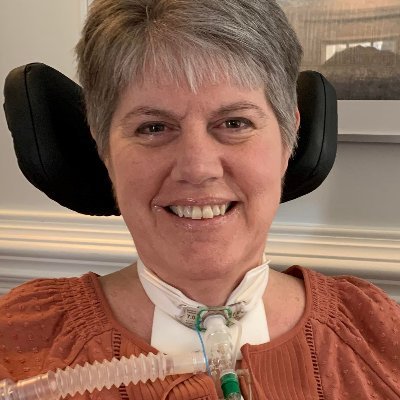
Shelly Hoover, EdD, Navy Veteran
WASHINGTON, DC — According to veterans with amyotrophic lateral sclerosis (ALS) and their advocates, staffing and budget cuts at VA have created delays in care that could result in fatal complications for someone with the terminal neurodegenerative disorder.
Meanwhile, patients are being referred to community physicians, where they encounter far inferior care, as well as clinicians who might be entirely unfamiliar with ALS, commonly known as Lou Gehrig’s disease, according to them and their advocates.
Testifying before the Senate VA Committee, Shelly Hoover, EdD, a Navy veteran who was diagnosed with ALS in 2013, described to lawmakers how seemingly minor medication shortages or delays can mean life or death for someone with a spinal cord disease or injury.
“I recently experienced severe complications after a VA pharmacy, due to budget cuts, was unable to provide the liquid form of a prescribed chemotherapy drug. I suffered severe burns across my chest and pelvic region, an extreme and avoidable outcome. Delays are now a constant risk,” said Hoover, who testified using an eye-driven electronic communication device. “For example, my replacement mic-key button, used for feeding and medications, is over a month late. How long before my current one breaks down, and my stoma becomes infected? Life-sustaining breathing and nutrition supplies that were once readily available now face delays of weeks or even months. For a person with my condition, this is not just an inconvenience—it’s a grave threat.”
According to Hoover, she will not die from ALS but from an infection, and these supply delays greatly increase that risk. However, despite the current challenges at VA, Hoover does not see community care as a viable solution.
“With one exception, my personal experience [with community care] has been a disaster. I’ve endured 6-month delays and lost referrals, forcing my husband to spend countless hours on the phone. In one instance, a private medical office initially refused to treat me due to my tracheostomy, a clear violation of my rights,” she said. “By contrast, I have never experienced a delay or faced discrimination from the Durham VA Medical Center. It is clear to me that the VA is the best choice for veterans.”
This sentiment was echoed by other advocates. While VA might have problems, they agreed that it’s far superior to community care as far as ALS treatment is concerned.
“We were sent to the community to get our care, first to see a neurologist,” explained Miranda Bailey, who received “a crash course in ALS” when her veteran stepfather was diagnosed in 2017. “We were the first people he had dealt with [who had] ALS. When you’re dealing with ALS you want somebody who has knowledge, not somebody who says ‘You know this is the first time I’ve dealt with that.’ We were grateful he was willing to learn, but care in the community was nothing like the care we received at VA. Although it was held up by red tape and all of the limitations they had, it was far superior.”
The reason VA physicians are more likely to have encountered ALS is because veterans are about 1.5 times more likely to develop the disease than nonveterans. Veterans with ALS are considered 100% service-connected disabled and are treated through VA’s system of Spinal Cord Injury and Disorders (SCID) centers. These 25 centers are meant to act as hubs for other VA medical centers, commonly called “spokes.”
However, due to the specialized nature of the care, hiring clinicians to staff these centers has historically been difficult. There also are a limited number of long-term beds—180 across the system. A 2024 report found that only 153 of those beds were actively available.
“Staffing requirements outlined in [VA’s directive] are based on the level of care needed to maintain the health and well-being for veterans with SCID,” explained Robert Thomas, president of the Paralyzed Veterans of America. “Unfortunately, some VA leaders have long treated them as optional rather than a directive based on best care standards. As a result, VA can only staff a nominal number of beds in some locations. The impact of such [staffing] practices causes severe delays in critically needed routine care, including annual exams and respite care, as well as acute care needs.”
The average age of VA’s 25 acute care SCID centers and 6 long-term care centers is nearly 40 years old, Thomas noted, with dozens of SCID construction initiatives going unfunded by VA year after year.
“SCID is not replicated outside of VA,” Thomas declared. “We believe VA should return to the practice of placing greater emphasis on funding facilities that provide the type of services like SCID care which the department uniquely provides.”
Hoover recommended that Congress also ensure that funding for ALS patients is not impacted by staffing and budget cuts.
“Congressionally allocated funds for special diagnoses, like ALS, cannot be spent due to VA-imposed hiring freezes and caps. Can that be corrected?” she asked. “These funding shortfalls have had a direct and devastating impact on my health and safety.”
According to VA, the department is working to expand SCID’s long-term care capacity with two new facilities in Dallas and San Diego, both of which have existing acute centers.
VA is also pursuing research into why veterans develop ALS at such a high rate.
“We’re aware of the propensity of veterans to develop ALS, and that’s included in our ongoing research to determine both presumed and causative agents,” explained Erica Scavela, MD, VA Assistant Under Secretary of Health for Clinical Services. “We have some suspicions and thoughts on that and there’s ongoing research.”