“Blind idealism is a death sentence.” – T.D. Severin
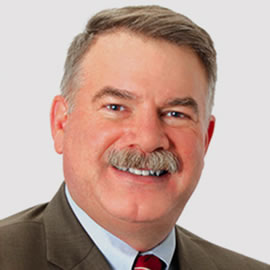
Editor-In-Chief, Chester “Trip” Buckenmaier III, MD, COL (ret.), MC, USA
T.D. Severin is a professor of surgery at the University of California and a writer. The quote comes from his debut novel, Deadly Vision. Beyond this column, in which I have had the good fortune to express my anxieties concerning the American medical profession, I have utilized reading and my own fictional book writing (Terminus – Trip Buck) to cope with the ongoing stressors of modern reality. Through fiction, the myriad shortcomings of the human species can be explored without the stark and morally bankrupt reality of actual human behavior and its consequences of injustice and death revealed on the nightly news. Regardless of your life’s occupation, reading remains the most viable method of understanding yourself and the world in which you live. Our ability to transmit feelings, beliefs, and ideas across the centuries via the written word is perhaps the most fundamental technology binding human civilization. If you want to understand the roots of our present struggles in politics, the economy, and medicine, consider picking up a book, as it has all been chronicled before.
Severin’s quote regarding ‘blind idealism’ struck a chord with me as I have been desperately looking for a topic beyond the ongoing train wreck at the U.S. Department of Health and Human Services (HHS) under Secretary Robert F. Kennedy, Jr. As a fictional author, I would have written Secretary Kennedy out of the storyline for HHS in the first chapter because this character is so damaging to the plot of HHS, maintaining the health of Americans. Despite the overwhelming preponderance of evidence regarding the advantages of vaccines to the general health of humanity, Kennedy’s blind idealism regarding his anti-vaccine beliefs recently led to the termination of the Centers for Disease Control and Prevention (CDC) Director, Susan Monarez.
Dr. Monarez committed the unforgivable sin of allowing science and evidence, as opposed to political ideology, to guide her decisions regarding CDC health recommendations and research priorities. Her termination resulted in the resignation of four other CDC department heads in protest and solidarity with Dr. Monarez. I would not dare use this plot line in my own writing, as it is too ridiculous to believe. I keep pinching myself to wake up from this fever dream, only to sadly realize this is our medical reality in the United States. At least I can retreat to another book or episode of Star Trek, where logic and common sense tend to prevail.
In truth, despite my less-than-flattering portrayal of Kennedy in these non-fiction editorials, I have no hate for the man. Admittedly, in personal moments of weakness, I rage against Kennedy with epithets proclaiming his stupidity or wickedness. This conclusion is too simplistic an explanation and only reveals my own (freely admitted) shortcomings as a human. While I am baffled by his healthcare decisions, my more moderate and rational side can see that he is a victim of blind idealism. Is there a scientist among us who has not succumbed to the venom and guile of disbelief when a cherished hypothesis is dashed upon the rocks of nasty, data-supported facts?
Kennedy, to his credit, is a man of firm and passionate conviction. I imagine (since I have no experience in law) that his tenacity in holding to an ideal, despite overwhelming evidence, served him and his clients well as a lawyer arguing the nebulous law. To any scientist worth their salt, this approach is antithetical to our existence. There really are no ‘laws’ in science, just robust hypotheses that withstand constant retesting or new theories. The scientists at the CDC understand this fact intimately and guide their health recommendations to Americans and the world based on the best scientific evidence available. When a scientist dutifully follows the scientific method in their quest for knowledge, their political ideology is irrelevant.
We need scientists, not ideologues, working for us at the CDC. Kennedy’s recent actions have resulted in the loss of five physician-scientist leaders to the American public. I am no longer confident in the health advice generated by Kennedy’s HHS. American faith in this venerated Department is understandably shaken. Perhaps now, more than at any time in American history, federal beneficiaries will be reliant on local federal medicine providers for scientifically sound health information. As one among you for so long, I am confident we will not be fooled by blind idealism when providing for our patients’ healthcare needs.