
While the U.S. military supports a large medical research enterprise, public awareness of those efforts and the benefits to civilians has remained a relatively unknown factor.
Military Population Shows High Adherence to Stool DNA Colorectal Cancer Screening
Colorectal cancer screening rates remain below national targets in the general U.S. population, but a large new study suggested that adherence might be substantially higher among military members, retirees and their families.
Results Similar Between IV and Oral Iron Replacement Therapy With Mitigation
Noting that the long-term outcomes associated with intravenous (IV) vs. oral iron replacement therapy in patients with chronic kidney disease have been unclear, a recent study sought to remedy that.
Morning Dosing Appears Better for Use of ICIs in Non-Small-Cell Lung Cancer Patients
Does synchronizing immune checkpoint inhibitor (ICI) dosing with morning peaks in immune activation improve clinical outcomes?
Did Burn Pit Exposure Increase the Prevalence of Multiple Myeloma Precursor, MGUS?
Monoclonal gammopathy of undetermined significance (MGUS) is a precursor condition for multiple myeloma.

Diabetes Staging System Improves Care for Type 2 Diabetes Patients In VA Primary Care Clinics
Guideline-concordant care for veteran Type 2 diabetes (T2D) patients improved with use of the Diabetes Staging System to guide treatment, predict survival and create a shared language for care in VA primary care clinics.
Video Telemedicine Might Match In-Person Diabetes Care Outcomes in Veterans
Telemedicine has become an important tool for managing chronic diseases such as diabetes, particularly for patients facing geographic, mobility or scheduling barriers to specialty care. But new research from the VA suggests outcomes may differ, depending on how remote diabetes specialty care is delivered.
CGM Data Predicts Kidney Decline, Cuts ESRD Risk in VA Diabetes Studies
VA researchers also find TBI doubles dementia risk in type 2 diabetes; stress tied to diabetes onset; and metformin linked to slower biological aging
Older Adults’ Approach to Cognitive Test Problems Can Help Predict Future Dementia Risk
How older adults approach cognitive test problems, such as the small mistakes they make and the strategies they use, can help predict who will later develop dementia, a finding that is helpful in detecting earlier any risk of cognitive decline, according to a recent study.
Polygenic Scores Show Limited Value in Cardiovascular Risk Prediction for Breast Cancer Survivors
Approximately 4 million women in the United States are living with breast cancer, a number that reflects advances in screening and treatment. As survivorship improves, attention has increasingly shifted toward long-term risks such as cardiovascular disease (CVD), a leading cause of mortality in this population and a growing concern within the VA, given the increasing number of women veterans.
MRI-Guided TMS Improves Outcomes in Combat-Related PTSD Trial
Combat-related post-traumatic stress disorder (PTSD) is one of the most difficult mental health conditions to treat among military personnel and veterans. Although trauma-focused psychotherapies help many patients recover, some continue to experience severe symptoms despite intensive treatment.
FY2027 VA Budget Predicts Healthcare Staffing Remaining at Current Levels
The VA funding request for fiscal year 2027 has the department expecting to spend big on new construction in the coming year, with less emphasis on any new hiring. It also continues to slowly bring spending on community care into parity with VA direct medical care.
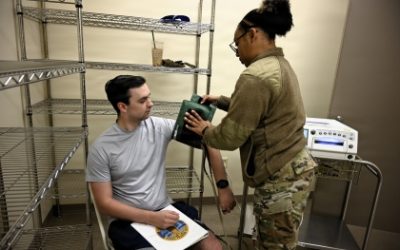
About Half of Post-9/11 Veterans Found to Have High Blood Pressure, Often Undiagnosed, Untreated
High blood pressure, often undiagnosed and untreated, is widespread among post-9/11 U.S. veterans and is found at a much greater rate compared to the general public, according to a new study.
Should the disorder infect the Army in the natural way, we should have more to dread from it than from the Sword of the Enemy
Gen. George Washington penned this month’s quote in a 1777 letter to Dr. William Shippen Jr., the Continental Army’s medical director, ordering all Philadelphia recruits for the Continental Army to be inoculated for smallpox. Washington had personal experience with the disease, contracting the virus on a visit to Barbados in 1751, marking him with scars but providing him with lifelong immunity to the disease. As a military commander, Washington witnessed how the scourge of smallpox could burn through his army and devastate combat effectiveness. During the ill-fated winter campaign in Canada (1775-1776), more revolutionary soldier casualties were due to smallpox than enemy fire.
Repeated Blast Exposure Appears to Increase Brain Aneurysms in U.S. Special Operations Forces
In U.S. Special Operations Forces personnel, greater repeated blast exposure is associated with a higher prevalence of intracranial aneurysms, according to a recent study.
Blood Pressure Drug Found to Reduces Arterial Stiffness, Especially in Older Patients
Low-dose amiloride, a potassium-sparing diuretic, appears to improve blood pressure and arterial stiffness in adults with overweight or obesity and features of metabolic syndrome, according to a new study.
RSV Vaccines Protect Veterans Well But Repeat Jabs Might Be Needed
Because of an older population of veteran patients, many with numerous co-morbidities, the VA recognizes respiratory syncytial virus (RSV) as a serious threat. Three RSV vaccines are currently approved for adults in the United States; the latest is an mRNA-based vaccine. While all three have demonstrated meaningful protection against RSV-associated lower respiratory tract disease (LRTD), concerns have been raised about the durability of some of them and whether repeat shots might be required.
Expert Panel Recommended Regular Review of Psychotropic Medications
Psychotropic medications are often prescribed for many complex, difficult-to-treat psychiatric disorders and include antidepressants, anti-anxiety agents, antipsychotics, mood stabilizers and stimulants. New guidance has suggested there’s a need for greater recognition of clinical psychopharmacology endpoints.
Parkinson’s Disease Might Be Somewhat Different in Veterans Exposed to Agent Orange
Parkinson’s disease (PD) presents somewhat differently in the VA’s healthcare system than in many community medical facilities.
New Solutions for an Old Problem: Extending Dopamine Effectiveness in Parkinson’s Disease
Deep brain stimulation works well for some Parkinson’s disease patients for some period of time, but the long-term benefits might not be as promising, according to a new VA study. That brings clinicians back to their problem of decades: How to extend dopamine benefits to avoid “off” episodes. New pharmaceuticals might offer the answers.
First-Generation Weight Loss Drugs Still Play a Vital Role in Patient Care at VA
As obesity remains a significant threat to health worldwide, first-generation obesity medications continue to play an important role in clinical practice, according to a recent review article.
Nearly a Quarter of Active-Duty U.S. Servicemembers Meet Obesity Definition
Obesity poses an increasing threat to U.S. military readiness, with more than half of active-duty servicemembers classified as overweight and about a fourth as obese. Yet, weight loss medications continue to be underused. Find out why and how increasing political pressure might change that.
Multiple Myeloma Survival Lower Than Previously Reported, but Powerful New Later Line Options Offer Hope
Including survival statistics for the nonmalignant precursor of multiple myeloma (MM), smoldering multiple myeloma, has led to a significant overestimation of 5-year survival patients with MM. But the news is not all bad. Recent approval of powerful new later line options are offering hope for patients who have tried multiple therapies are offering hope for more durable survival.
The Introduction of Immune Checkpoint Inhibitors ‘Game Changer’ in NSCLC, Other Cancers
Presentations at the most recent European Society of Medical Oncology (ESMO) annual conference and other studies underscored the durability of immune checkpoint inhibitors (ICIs), which enable the patient’s immune cells to destroy cancer cells.
Cancer Vaccines in Lung Cancer: A New Strategy to Overcome Immunotherapy Resistance
Immune checkpoint inhibitor (ICI) resistance can be caused by tumor evasion mechanisms that prevent T cells from recognizing or killing cancer cells. Cancer vaccines are designed to address those challenges by stimulating the immune system to recognize tumor-specific antigens. Unlike preventive vaccines, these therapeutic approaches can “induce de novo or amplify pre-existing tumor-specific immune responses, thereby enhancing long-term immunological memory while maintaining a favorable safety profile,” according to a new study.
Acalabrutinib Gains Ground as Preferred BTK Inhibitor for CLL/SLL in Veterans Likely to Have Co-Morbidities
Veterans with chronic lymphocytic leukemia and small lymphocytic leukemia tend to be very different than typical clinical trial populations, presenting with diagnoses of hypertension, type 2 diabetes, chronic kidney disease, obstructive sleep apnea, and post-traumatic stress disorder, among other conditions. That is why VA’s oncology clinical pathways now prefer a first-line therapy that has demonstrated efficacy across high-risk genomic subgroups, has a lower rate of adverse effects and is compatible with the complex comorbidity profile common among older veterans.
More Genetic Testing, New Drug Combinations Hold Promise for Prostate Cancer With Germline Variants
Pathogenic germline variants might be found in a relatively small percentage of prostate cancer patients, but they can make the prognosis much, much worse. Now, the future is looking brighter, with the VA and other healthcare systems spearheading more testing. At the same time, drug combinations involving PARP inhibitors are showing some success in lengthening survival.
B-Cell Lymphomas in Veterans: Expanding the Role of Next-Generation BTK Inhibition
The PACT Act marked the largest single expansion of veterans’ benefits for toxic exposure in the history of the VA. Among its most consequential provisions for hematology-oncology care, the legislation established lymphomas of any type as presumptive service-connected conditions for veterans who served in qualifying locations during the Gulf War era or in the post-September 11, 2001, conflicts.
High Rates of HIV, HPV and Toxic Exposure Make Anal Cancer a Concern for Veterans
Veterans are at especially high risk for squamous cell carcinoma of the anal canal (SCAC) because of high rates of human immunodeficiency virus (HIV) and human papillomavirus (HPV). It also is one of the gastrointestinal cancers considered a presumptive service condition for those deployed to many areas in the Middle East and Africa.

Veterans With ALS Report High Satisfaction With VA Care Compared to Outside Care
Amyotrophic lateral sclerosis (ALS), also known as Lou Gehrig’s disease, is a progressive neurogenerative disease that has devastating symptoms. It is 1.5 times more common in military veterans than those who never served. A recent survey found that veterans with the disease gave high marks to VA’s highly comprehensive and coordinated system to manage their care.