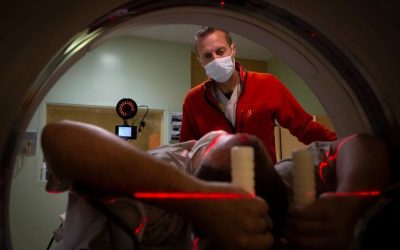
A recent study asked a question critically important to VHA clinicians: Are post-traumatic stress disorder (PTSD) and health-related social needs (HRSNs) associated with incident mild cognitive impairment, Alzheimer’s disease and Alzheimer’s disease-related dementias among U.S. veterans?
Brenda Mooney
How Low Is Enough for PSA Levels After Prostate Cancer Treatment?
Reaching a prostate-specific antigen (PSA) level of less than 0.2 ng/mL after starting androgen deprivation therapy (ADT) can maximize the chance of survival, according to a new study.
Survival After MI Affected by Acute Kidney Injury, Baseline Renal Function, Troponin Levels
Baseline kidney function, acute kidney injury (AKI) and troponin levels are associated with short- and long-term survival after myocardial infarction (MI), a newly published VA study found.
Updated COVID-19 Vaccines Protected Patients With Autoimmune Rheumatic Conditions
With changes at the national Centers for Disease Control and Prevention (CDC) and its Advisory Committee on Immunization Practices (ACIP), confusion about who should get what seasonal vaccines has burgeoned. That might especially be the case with patients who have comorbidities such as autoimmune conditions.
Burned Out by Caring for Too Many Complex Patients, Almost One-Third of VHA PCPs Want to Quit
More than half of VHA primary care practitioners responding to a survey reported being burned out, and nearly one-third said they planned to leave, according to a new study examining the effects of high patient panel fullness.
Exposure to Explosive Devices Linked to a Various Conditions Years Later for U.S. Veterans
Exposure to high-level blasts from incoming explosive devices or land mines appear to increase the risk for veterans to later develop conditions affecting a range of body systems, according to a new study.
Who in the Military Is Most Likely to Get a Devastating ALS Diagnosis?
Military service is considered one of the most consistent risk factors for the development of amyotrophic lateral sclerosis (ALS). Yet, not much research has been done to determine which characteristics make servicemembers more or less likely to develop the rare, progressive disease characterized by the degeneration of nerve cells in the brain and the spinal cord.
An Increasing Percentage of Veterans Not Being Treated for Major Depressive Disorder
Most veterans with major depressive disorder (MDD) received recommended treatment within the VHA, but a new study warned that there was an increasing trend in the proportion who did not.
VA Study: Beta Blockers Might Help Extend Prostate Cancer Survival
Even though neural regulation contributes to pancreatic ductal adenocarcinoma (PDAC) development, the effects of neural-targeting medications on presentation or outcomes haven’t been well-documented according to a new study.
Pilot Study Indicates Psilocybin-Assisted Therapy Safe, Promising for Veterans With PTSD
Psilocybin-assisted therapy for veterans with post-traumatic stress disorder (PTSD) who got no relief from conventional treatments appears to be safe, according to the first U.S. clinical trial. It reported no serious adverse events or increases in suicidal thinking or behavior.
Military Toxic Exposures Appear to Affect Both Mental and Physical Health in Veterans
Environmental hazards encountered during military service, such as Agent Orange and toxins from open-air burn pits, are known to be linked to adverse physical health outcomes. The VA recognizes them as presumptively service related under the Agent Orange Act of 1991 and the Promise to Address Comprehensive Toxics Act of 2022.
2026 Dyslipidemia Guideline Expanded Statin Recommendations to Another 21.5 Million Americans
The 2026 dyslipidemia guideline significantly expanded the U.S. population recommended for primary prevention statin therapy, especially in adults at lower risk.
GLP-1RAs Don’t Work Better Than Oral Agents to Enable Insulin Discontinuation in T2D
With all of the hype surrounding glucagon-like peptide-1 receptor agonists (GLP-1RAs) for Type 2 diabetes, some proponents have questioned whether patients using the drugs could eventually discontinue their use of insulin for glucose control.
In VA EDs, Female Physician Slightly More Likely to Order Scans, Tests and Admit Patients
Female and male physicians have different practice patterns, according to past studies mainly focused on primary care.
VA Payments for Community Care Continue to Increase Substantially
The VA recently announced that it had made more than $36 billion in payments to local healthcare providers across the country in fiscal year 2025 as part of the VA MISSION Act.
Which Veterans With Cancer Are Most Likely to Attempt Suicide?
In recent years, the conventional wisdom has been that patients at risk for suicide after being diagnosed with cancer usually were older white males with advanced or poor-prognosis cases.
How Statins Affect Survival Free of Incident Frailty in Older U.S. Veterans
A top priority for researchers who study aging is how to identify and treat frailty, even though there are no established therapeutic interventions for the condition.
Younger Veterans With Insomnia/Sleep Apnea Combo Have High Risk of Type 2 Diabetes
The combination of insomnia and obstructive sleep apnea can be a dangerous combination for U.S. veterans, resulting in a much higher risk of Type 2 diabetes, among other conditions.
COVID-19 Vaccine Shows Significant Protection Against MACE in Veterans 75 or Older
Past research has demonstrated that receipt of vaccines was associated with reduced COVID-19–associated cardiovascular risk. A new study took that a step further, finding evidence of vaccine effectiveness against the broader outcome—all-cause major adverse cardiovascular events (MACEs), suggesting that “likely reflects the hidden burden of undetected SARS-CoV-2 and associated complications that are amenable to reduction by COVID-19 vaccination.”
Older Adults More Likely to Be Prescribed Drugs Increasing Delirium, Fall Risk in Acute, Post-Acute Settings
Even though some types of medications, such as antipsychotics, affect cognition and might increase delirium and fall risk among older adults, they remain frequently prescribed, according to a new study, but office-based physicians don’t appear to be the worst offenders.