

Approximately 4 million women in the United States are living with breast cancer, a number that reflects advances in screening and treatment. As survivorship improves, attention has increasingly shifted toward long-term risks such as cardiovascular disease (CVD), a leading cause of mortality in this population and a growing concern within the VA, given the increasing number of women veterans.

How Mental Health, Substance Use Affect Mammography Uptake in Women Veterans
Women veterans are more likely than their civilian peers to experience mental health disorders, yet how those conditions affect preventive care—such as mammography—has been unclear.
Male Breast Cancer Higher in Veteran Prostate Cancer Survivors
Male breast cancer incidence is rare, but veteran status is found to be associated with increased risk, and a higher prevalence has been identified for male veteran prostate cancer survivors.
New Legislation Sparked by VA’s Quiet Removal of Male Breast Cancer as a Presumptive Condition Under the PACT Act
Although it received little press coverage until recently, the VA is removing male breast cancer from the list of toxic exposure-related presumptive conditions listed under the PACT Act.
HPV Vaccine, Often Overlooked After Abnormal Pap Smear in Active-Duty Women
Human papillomavirus (HPV) is the most common sexually transmitted infection worldwide, with nearly all sexually active individuals expected to contract it at some point in their lives.
Limited Information on Breast Cancer Risk After Military Exposures
A long list of health effects have been attributed to military environmental exposures (MEE) such as volatile organic compounds (VOCs), endocrine-disrupting chemicals (EDCs), tactile herbicides, airborne hazards and open burn pits (AHOBP) and depleted uranium.

Continued Issues, Absent Research in Breast Cancer Care for Women Veterans
Breast cancer remains a significant health concern, particularly among women veterans, who face unique challenges within the Veterans Affairs (VA) healthcare system.
Cytomegalovirus Examined in Breast Cancer Tumor Development
Cytomegalovirus (CMV), a herpesvirus that leads to lifelong infection, appears to play some role in breast cancer, according to a new study.
Why Do Surprising Distant Metastases Occur in 10-30% of ‘Cured’ Breast Cancer
PITTSBURGH — In most cases of breast cancer, no evidence of spread is found, the primary tumor is removed and the patient is as close to cured as possible, at that point. In 10% to 30% of cases in women, however, distant metastases recur after years to decades. “This...
New Efforts Seek to Reduce Treatment Time, Travel for Breast Cancer Patients
WASHINGTON — Earlier this year, the VA announced expansion of the "Close to Me" cancer program, with the understanding that access to medical centers providing specialty cancer care can be difficult for many veterans. The expansion will bring new cancer diagnosis,...
Mutant HRAS-Driven BC Tumors More Linked to Skeletal Muscle Dysfunction
The quality of life for many breast cancer patients is affected by skeletal muscle dysfunction, which is estimated to appear in about 39% of cases.
Mutant HRAS-Driven BC Tumors More Linked to Skeletal Muscle Dysfunction
The quality of life for many breast cancer patients is affected by skeletal muscle dysfunction, which is estimated to appear in about 39% of cases.
Here’s How Much Nonadherence to ET Increases Breast Center Recurrence
What is the likelihood of breast cancer recurrence in nonmetastatic survivors who are nonadherent to endocrine therapy, the mainstay treatment to reduce BC recurrence risk?
Limited Information on Breast Cancer Risk After Military Exposures
A long list of health effects have been attributed to military environmental exposures (MEE) such as volatile organic compounds (VOCs), endocrine-disrupting chemicals (EDCs), tactile herbicides, airborne hazards and open burn pits (AHOBP), and depleted uranium.

VA Examines Strategies to Increase Mammography Uptake
Screening mammography plays a crucial role in identifying and treating breast cancer at its early stages, yet many women who could benefit from regular mammogram screenings don’t receive them.
Better Understanding of What Patients Want from Breast Reconstruction Surgery
As many as 40% of breast cancer survivors are dissatisfied after breast reconstruction due to unexpected outcomes that don’t meet personal preferences.
Results Mixed for Military Toxic Exposure Effect on Breast Cancer Incidence
Little work has been done to investigate the relationship between MEE and risk of breast cancer.
Tailoring Imaging Regimens Could Detect More Second Breast Cancers
Women at a high risk of interval second breast cancers might benefit from additional surveillance imaging modalities, according to a new study.
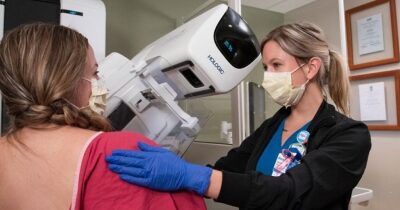
VA Is Screening for Breast Cancer in Veterans Under 40 With Toxic Exposures
Veterans younger than age 40 might be eligible for breast cancer risk assessments and mammograms if they were exposed to burn pits and other toxins during their service, according to the VA.
Better Gauging Breast Cancer Risk in Women Veterans of African Ancestry
Polygenic risk scoring (PRS) appeared to work well in predicting incident breast cancer for a prospective cohort of European (EUR) ancestry women veterans but not as well for those of African ancestry, according to a recent study.
Chemotherapy-Free Option Could Be Viable for Some Metastatic Breast Cancer
VA and MHS are treating far more breast cancer than ever before, especially since some recent studies suggest that women veterans are as much as 40% more likely to develop breast cancer than their civilian counterparts.
Military Health Mammography Lapses During Pandemic Spotlights Disparities
Breast cancer screening within the Military Health System (MHS) plummeted by 74% in the early COVID-19 pandemic period and 22% in the late pandemic period, compared with the pre-pandemic period.
Quality Care Reduces Breast Cancer Survival Rate Disparities Based on Race
Though non-Hispanic Black women are more likely to have tumors at a higher grade and later stage and be diagnosed with triple-negative breast cancer
Women with Pathogenic Variants Excluded from Germline Testing after DCIS
Every year, 60,000 women in the United States receive a diagnosis of ductal carcinoma in situ (DCIS), a noninvasive form of breast cancer. Accounting for one in five breast cancer diagnoses, DCIS has increased with the adoption of routine mammography, but it is far more than just an artifact of imaging.
Smoking History Affects Overall Survival in Women With Breast Cancer
Largely because of its association with conditions such as lung cancer and cardiovascular/pulmonary diseases, cigarette smoking is the leading cause of preventable morbidity and mortality in the United States, with about 480,000 deaths each year attributable to the habit.
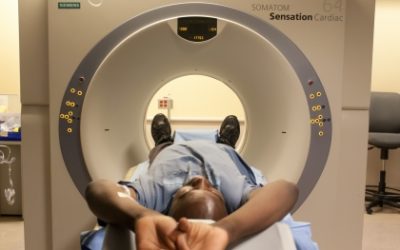
Military, Veterans More Likely to Be Screened for Many Types of Cancer
While some cancer diagnoses are disproportionately high among VA patients, the cause does not appear to be inadequate screening, according to a new study.
Military, Veterans More Likely to Get Most Cancer Screening
While cancer diagnoses are disproportionately high among VA patients, the cause does not appear to be inadequate screening, according to a new study.

MHS Patients Have Higher Breast Cancer Survival Rates Than U.S. in General
Accessibility to healthcare is an important determinant in cancer survival. Studies of patients in the military health system (MHS), which provides universal care to uniformed servicemembers, military retirees and family members, have shown higher survival rates for several forms of cancer compared to the general U.S. population. A new study has added breast cancer to that list.
When Is a Biopsy Appropriate to Diagnose, Rule Out Skin Cancer?
Skin malignancy has increased in prevalence over the last 15 years, but it is not clear how military personnel have been effective.
Women Benefit From Both Lung, Breast Cancer Screening
Women are most likely to die from lung cancer—with mortality greater than breast, cervical and ovarian cancer combined—and increased screening has been shown to significantly reduce mortality.