
Asthma is a common and potentially life-threatening illness that can affect children from all races and ethnicities, but the burden of asthma is not shared equally. Previous studies have shown there are racial/ethnic variations in the prevalence, treatment and outcomes of asthma; these variations can be attributed to barriers to accessing healthcare, costs associated with healthcare and the larger social determinants of health.
‘Unlawful’ DEI Practices Banned in Proposed OMB Rule for Federal Grants
A proposed rule from the Office of Management and Budget (OMB) is seeking to overhaul the uniform guidance for federal grantees. The rule would deemphasize the peer-review process,

Military Health System Sees Signs of Renewed Surgical Disparities Following COVID-19
The Military Health System (MHS) is often cited as a model for reducing healthcare disparities because every beneficiary is covered by the same insurance.
VA Eliminates LGBTQ Care-Coordinator Positions in Response to Executive Order
VA is eliminating its LGBTQ care coordinator positions, as well as all activities dealing with veterans’ gender identity, according to a leaked internal memo.
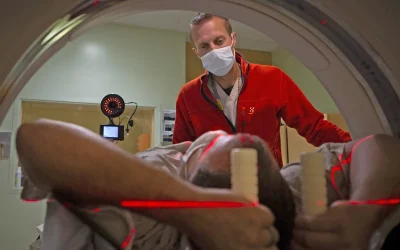
Duration-Based Lung Cancer-Screening Criteria Might Improve Equity Among Diverse Populations
Lung cancer is the leading cause of cancer-related death in the United States, and early detection through screening is one of the most effective ways to reduce mortality. Yet despite expanded eligibility criteria, racial and ethnic disparities in lung cancer screening persist.
Democrats Claim VA Is ‘Weaponizing Shutdown,’ Refusing to Help on Constituent Inquiries
According to Democratic leaders on the House and Senate VA committees, the VA under the leadership of Secretary Douglas Collins has “weaponized” the government shutdown, using it as an opportunity to attack congressional Democrats and an excuse to ignore congressional inquiries.

Homeless Veterans Who Get Housing, Twice as Likely to Be Screened for Cancer
Here’s an effective way to improve cancer screening among homeless veterans who are eligible for cancer screening but not up to date: Find housing for them.
Black Patients With Non-Hodgkin Lymphoma Fare Better With MHS Care
Poorer survival of Black patients with non-Hodgkin lymphoma (NHL) compared to white ones might be related to healthcare access issues in the general population, according to a new study.
Non-VA Services Reveal Hidden Biases in VA Hospital Performance Metrics
As the veteran population ages and healthcare options expand, it might be beneficial for the VHA to reassess how it evaluates hospital performance, a new study suggested.
VA Vehemently Denies That Bylaw Changes Allow Clinicians to Discriminate
Changes being made to the language in hospitals’ bylaws will not allow doctors to discriminate based on national origin, marital status or political affiliation, the VA stated in response to an article published in The Guardian in mid-June.
Better Data Shed Light on American Indian/Alaska Native Mortality Disparities
A new study led by researchers at the national Centers for Disease Control and Prevention is drawing renewed attention to a long-standing issue that has quietly distorted public health statistics for decades: the racial misclassification of American Indian and Alaska Native (AI/AN) individuals on death certificates.
No Racial Disparities in Non-Hodgkin Lymphoma Survival in MHS
Racial disparities in non-Hodgkin Lymphoma (NHL) are significantly mitigated when patients are in a universal access healthcare system, a military study reported.
Military Access Issues, Racial Disparities Create Gaps in Endometrial Cancer Care
Endometrial cancer, which develops in the lining of the uterus,is the most prevalent gynecologic malignancy in the United States, with rising incidence and mortality rates.
VA Plans to Phase Out Gender-Affirming Care for Transgender Veterans
VA has announced that it will be phasing out gender-affirming care for veterans. This is being done, officials said, in response to President Donald Trump’s Executive Order 14168, which excludes transgender people from the government’s definition of gender.
Happiness Levels in U.S. Military Veterans Similar to General Population
Overall, U.S. military veterans report happiness levels that are only slightly lower than the general population, despite potentially traumatic experiences during deployment.
VA Hospitals Went from Worse Than Community Facilities in 2017 to Outperforming Them in 2021
With the debate heating up about how much VA care should be shifted to the community, a new study found that VA hospitals changed in a 5-year period from 2017 to 2021 from providing worse experiences for Black and poor-health patients to outperforming community hospitals for those and all other patient subgroups examined.
Understanding Long-Term Surgical Outcomes Can Help Ensure Treatments Align With Patient Priorities
Surgical outcome studies often focus on mortality, complications or hospital readmissions. While such outcomes are important, they don’t always align with matters most to older patients, particularly those nearing the end of life.
Care Access Doesn’t Explain Racial Disparities in Rectal Cancer
Does differential access to care explain racial disparities in treatment and outcomes of rectal cancer? A new study from the Uniformed Services University of the Health Sciences suggested that other factors are likely to be at play.
Black Americans Have Less Alzheimer’s Disease Awareness, Despite Higher Risk
Older Black Americans are almost twice as likely as white Americans to be affected by Alzheimer’s and related dementias, with 21.3% of Black Americans aged 70 and older living with the disease.

Equal, Equitable and Excellent: A Call to Action for Indigenous Care
Native Americans serve in the military at the highest rates per capita of any racial or ethnic group. According to the Office of Health Equity, analysis of fiscal year 2016 to 2019 data revealed that American Indian veterans, less than half were enrolled in VA care.
Removing Race From Lung-Function Equations Shifts Disease Classifications
In 2023, the American Thoracic Society recommended race-neutral interpretation of lung function and requested the investigation of “consequences for the yet-unquantified number of individuals with results near decision-making thresholds.”

Essien Pushes Pharmacoequity in VA Healthcare to Combat Disparities
A general internist and health services researcher with the Center for the Study of Healthcare Innovation, Implementation, and Policy (CSHIIP) at the Greater Los Angeles Healthcare System, Utibe Essien, MD, MPH, has devoted his career to defining and then breaking down the systemic problems that lead to healthcare inequity.
Atrial Fibrillation Patients Less Likely to Receive Anticoagulant Therapy at VAMCs Serving More Minority Patients
VA patients receive different medical care for atrial fibrillation depending on whether they visit a VAMC serving more minority patients, according to a new study.
VA Has Low Rates of Preoperative Life-Sustaining Treatment Documentation
Surgery is a significant healthcare event that necessitates timely planning for goals of care (GOC), involving discussions about one’s current values, aspirations and treatment preferences.
White Patients Much More Likely to Receive Knee Arthroplasty In MHS
The U.S. Military Health System is touted as an equal-access medical provider, and scores of studies have demonstrated that few racial inequities exist in the treatment it provides for many conditions.

VA Will Fund Medical Residencies in Underserved Areas Across the United States
In an effort to improve healthcare access for veterans in rural, trial and underserved areas across the United States, the VA is creating a new pilot program for graduate medical education.
VA Has Good Record Hiring Some Minorities, but Few End Up in Top Management
Over the last decade, VA has increased the percentage of employees who are non-white, but those employees are more likely to be paid less, be fired more and receive fewer raises and awards, as well as, less vacation time, according to a new report.
Deportation Increases Risk of Poor Health for Noncitizen U.S. Veterans
For noncitizen U.S. military servicemembers, deportation can increase the risk of poor physical and mental health outcomes, making this group a vulnerable and often overlooked health disparity population, according to a recent study.
Concern Is Growing About Sharp Increase in Asian American, Native Hawaiian, Pacific Islander Veteran Suicide Rates
Growing suicide rates among Asian American, Native Hawaiian, and Pacific Islander (AANHPI) veterans are of increasing concern, according to a new study.

VA Expands Program Caring for Pregnant Veterans, New Mothers
As of this month, mothers treated by the VA healthcare system pre- and post-partum have access to maternity care coordinators from the beginning of their pregnancy to 12 months after birth. That is a change from the previous end-date of 8 weeks post-partum.