The Pentagon is partially walking back its decision to make the influenza vaccine entirely voluntary, granting exemptions to the policy change for the services, including requiring it for all recruits entering basic training.


The Pentagon is partially walking back its decision to make the influenza vaccine entirely voluntary, granting exemptions to the policy change for the services, including requiring it for all recruits entering basic training.
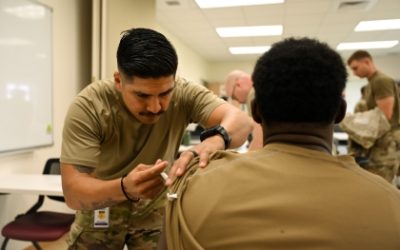
Annual influenza vaccines are no longer mandatory for military personnel.
Hospitalized veterans with respiratory syncytial virus (RSV) or influenza infections but not COVID-19 are at increased risk of developing secondary Streptococcus pneumoniae infections, according to a recent study.
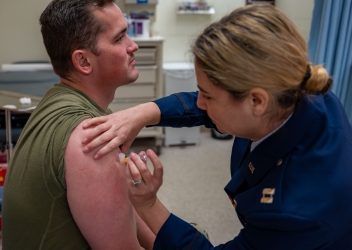
During the 2022 to 2023 season, infection with SARS-CoV-2 was associated with more severe disease outcomes than influenza or respiratory syncytial virus (RSV), although differences were less significant during the 2023 to 2024 season, according to a VA study.
Noting that vaccine immunogenicity is affected by a variety of factors, melatonin has been reported to affect immune responses to vaccines and infection, according to a new study.
COVID-19 survivors appear to be at greater risk for new medical conditions. A new study sought to determine if previous infection with the SARS-CoV-2 virus is associated with a change in frailty among older U.S. veterans.
How do race, ethnicity, sex and rurality affect influenza vaccination adherence in a VHA cohort?
Veterans with chronic lung diseases, particularly idiopathic pulmonary fibrosis (IPF), other interstitial lung diseases (ILD) and chronic obstructive pulmonary disease (COPD), have an increased risk of experiencing more severe 30-day outcomes with COVID-19, according to a recent study.
The long-term effects of COVID-19 might last longer and manifest themselves later than was previously thought, according to a new study that followed patients for three years after their initial illness.
In 2017, almost no healthcare personnel at VA hospitals reported in a survey that they had received mandatory influenza vaccinations. By 2021, almost all VA respondents said they had.
Influenza is a significant contributor to coronary and cerebrovascular events in U.S. veterans and exacerbates underlying conditions, according to a new study.
The risk of dying while hospitalized for COVID-19 might have decreased since the pandemic began, but SARS-CoV-2 still has a considerably higher mortality rates than seasonal influenza, according to a new VA study.
Clinicians are well aware of long COVID, the enduring health conditions caused by the SARS-CoV-2 virus’ ability to attack multiple organ systems.
Inhaled glucocorticoids do not appear to be effective in shortening the time to symptom resolution or preventing hospitalization or death among outpatients with mild-to-moderate COVID-19, according to a recent study.
The devastating toll of acute COVID-19 infections on human lives is well documented. Yet a pressing question remains: Do survivors of acute COVID-19 face a higher risk of mortality in the aftermath of their infection and, if so, for how long does this risk persist?
The risk of COVID-19 morbidity and mortality is much higher for immunocompromised patients, and, while vaccines have been highly successful at preventing the spread of SARS-CoV-2 and decreasing the likelihood of severe disease in the general population, those who are immunocompromised still face a greater danger for breakthrough infections and persistent viral replication, according to a new study.
A new VA study sought to determine whether acceptance of the COVID-19 vaccine might have influenced update of annual influenza vaccination.
Racial disparities in receipt of high-dose influenza vaccine (HDV) have been documented nationally, but a new study sought to determine if small-area geographic variation in such disparities also exists.
Which provides better protection for older adults: the adjuvanted inactivated influenza vaccine (aIIV) or high-dose inactivated influenza vaccine (HD-IIV)?
Public health officials can better target their message if they better understand where COVID-19 primary and booster vaccine uptake is low. A new VA study suggests that whether the potential recipient lives in a rural or urban area can be an important factor.
On March 7, 2020, then-Gov. Andrew Cuomo signed Executive Order 202 declaring a state of emergency for the state of New York. Within days, military forces in the state mobilized to respond to the pandemic with the deployment of 270 servicemembers from the New York Army National Guard and Air National Guard to New Rochelle in Westchester County
In the early days and months of the COVID-19 pandemic, the VA and other healthcare systems were focused on the daunting work of helping patients survive the acute effects of the disease.
While co-infection with more than one respiratory virus was especially a problem this fall and winter, it has happened before, especially in an environment where SARS-CoV-2 is circulating.
Even after years of the COVID-19 pandemic, data remains somewhat limited on the safety profile of SARS-CoV-2 vaccine in patients taking immunosuppressive medications.
Veteran patients who received a COVID-19 vaccination series, plus a booster vaccine dose, had a low incidence of hospitalization, death or severe illness from COVID-19, according to a new study.
Black veteran patients received different medical interventions than white patients when hospitalized with COVID-19 in VAMCs across the country, according to a new study.
The Vaccine Adverse Effect Reporting System, established by the national Centers for Disease Control and Prevention, has more than 350 reports of hyperglycemia post-influenza vaccine, according to a new study.
An often repeated misconception during the COVID-19 pandemic is that the Sars-C0V-2 and influenza viruses are similarly fatal for older adults, although there have been limited data to support that observation.
The DoD’s support of the United States government’s response to the Ebola crisis in Liberia, beginning in 2014‐2015, was the first U.S. military operation to support a disease‐driven foreign humanitarian assistance mission.
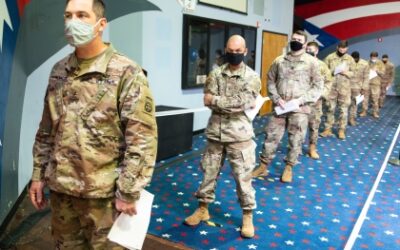
Although serious allergic reactions to mRNA vaccines are extremely rare, fear of them has driven hesitancy among some potential recipients. That especially has been the case when an adverse effect occurred after the first dose.
