Daily use of naltrexone, a medication that blocks the effects of opioids with minimal side effects, doesn’t adversely affect the physical, cognitive or marksmanship performance of U.S. Army soldiers, according to a recent study.


Daily use of naltrexone, a medication that blocks the effects of opioids with minimal side effects, doesn’t adversely affect the physical, cognitive or marksmanship performance of U.S. Army soldiers, according to a recent study.

As of this month, mothers treated by the VA healthcare system pre- and post-partum have access to maternity care coordinators from the beginning of their pregnancy to 12 months after birth. That is a change from the previous end-date of 8 weeks post-partum.

Heart failure affects an estimated 6.2 million adults in the United States and is associated with disability, diminished quality of life and a 5-year mortality of 50%.
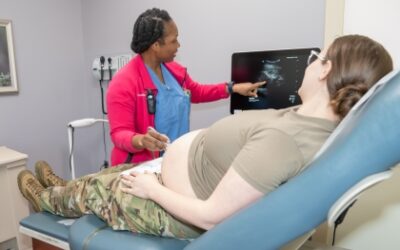
A lawsuit filed recently in federal court in Manhattan challenges the eligibility policies of DoD and VA for who can receive in vitro fertilization (IVF) care, calling them discriminatory.

Veterans younger than age 40 might be eligible for breast cancer risk assessments and mammograms if they were exposed to burn pits and other toxins during their service, according to the VA.
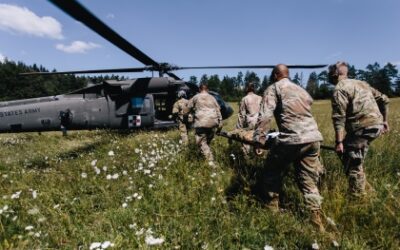
In planning and preparing for the future possibility of large-scale combat operations, military medicine might have to decide which wounded warriors can have delayed evacuations.
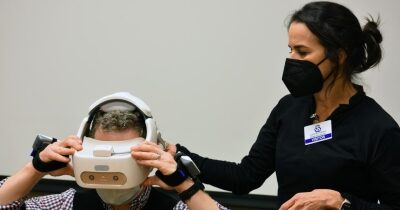
In partnership with the VA’s Office of Healthcare Innovation and Learning (OHIL), Penumbra Inc. aims to change the way veterans receive and literally see rehabilitation services.

Patient satisfaction is higher with care received at VA hospitals than most community facilities, according to recent federal data which bolsters previous evidence of comparatively high-quality care provided by VHA facilities.

For veterans exposed to trichloroethylene (TCE) and other volatile organic compounds four decades ago, the risk of Parkinson’s disease is 70% higher than for veterans without those exposures, a new study suggests.

Despite concerns about exposure to hazardous material, military personnel who deployed to Southwest Asia actually had a lower risk of dying from cancer than their colleagues who were never deployed, according to a new study.

A new review has determined that care provided in the VA healthcare system is consistently as good as or better than non-VA care in terms of clinical quality and safety.

Most hospitalizations in military servicemembers for exertional rhabdomyolysis, a syndrome of muscle breakdown following exercise, are associated with heat illness and present with lower creatine kinase levels than cases without associated heat illness, according to a recent study.

Military aviators and the ground crews that service their planes are at a greater risk to develop melanoma and other types of cancer, according to a Pentagon study released last month. Just what factors are contributing to that risk remains unknown, however.
Recent VA/DoD guidelines call for new measures to reduce the use of opioid pain relievers in the management of chronic pain, including the preferential use of buprenorphine over full agonist opioids.
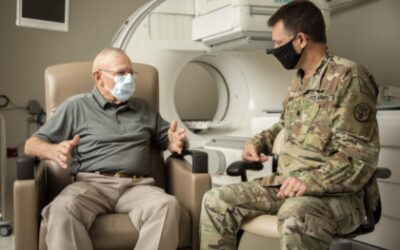
Prostate cancer is the third-most-common cancer in men in the U.S. military and the second-leading cause of cancer mortality in U.S. men overall.

The VALCAN-O score, which uses a data set from the VHA, was developed for patients diagnosed with resectable early-stage nonsmall-cell lung cancer (NSCLC).

The National Lung Screening Trial (NLST), which began at the beginning of the 21st century, compared two ways of detecting lung cancer: low-dose helical computed tomography (CT)—often referred to as spiral CT—and standard chest X-ray.

With the PACT Act set to officially go into effect this month, legislators are watching VA closely to see how the department deals with the hundreds of thousands of expected new claims.
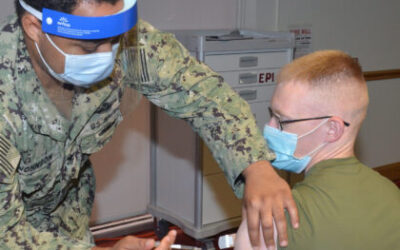
Before year’s end, Congress passed the $858 billion National Defense Authorization Act (NDAA) for FY 2023, the largest defense spending bill of its kind.
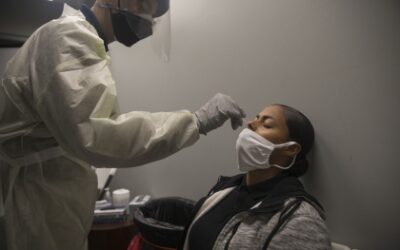
Sickle cell trait (SCT), a condition in which a person has one abnormal allele of the hemoglobin beta gene, affects an estimated 5.02% of non-Hispanic blacks, 1.08% of Hispanics and 0.1% of whites in the U.S. military.
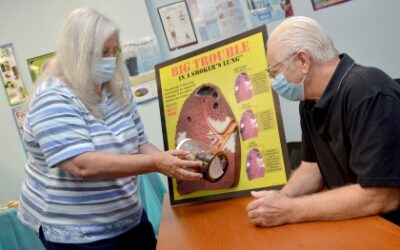
Long-term smokers often have serious respiratory symptoms, but without airflow obstruction. A new study questioned whether those patients should be treated with drugs used for chronic obstructive pulmonary disease (COPD).
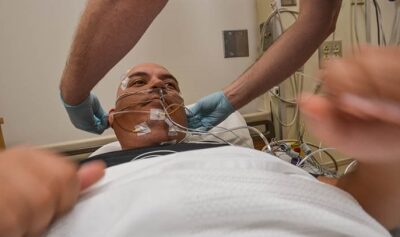
Military service and trauma have been linked to an increased risk for substance abuse and mental health disorders. Yet research suggests a lack of willingness to seek treatment for these problems keeps many veterans from getting the help they need.
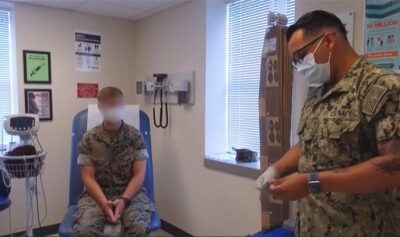
Chlamydia is the U.S. military’s most common sexually transmitted infection (STI) among active duty servicemembers, according to 2021 and 2022 reports on STIs by the Defense Health Agency’s Armed Forces Health Surveillance Division.

Post-traumatic stress disorder (PTSD) impacts 11-20% of Iraq and Afghanistan War veterans and can have a significant effect on quality of life.

Irritable bowel syndrome (IBS) is a syndrome characterized by abdominal pain and altered bowel habits.

The prevalence of chronic obstructive pulmonary disease among veterans is estimated to be between 8% and 19%—significantly higher than in the general population

Gulf War veterans with chronic pain display changes in the volume of key areas of the brain, a finding that could explain why these veterans experience prolonged pain, according to a new study.

Although serious allergic reactions to mRNA vaccines are extremely rare, fear of them has driven hesitancy among some potential recipients. That especially has been the case when an adverse effect occurred after the first dose.
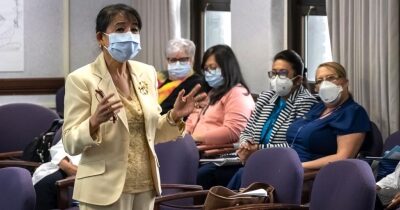
With the implementation of the Veterans’ Choice Act of 2014 (VCA), hospitalization within the VA healthcare system showed a modest decline.

Early-stage cancers can be very challenging to see, but finding them before they advance provides the best chance for curative treatment with the fewest complications.