
VA is continuing to move forward with its Restructure for Impact of Sustainable Effort (RISE) initiative—the complete overhaul of the VISN networks under which its facilities are grouped and managed.
Availability of Women’s Health PCPs Can Stem Female Veterans Attrition From VA Care
In the VA healthcare system, which has predominantly male patients, new women veteran patients who receive care from a women’s health primary care practitioner have a much lower risk of discontinuing VA care.
Newest VA/DOD Asthma Guideline Emphasizes Anti-Inflammatory Control in Primary Care
Asthma affects 8.7% of U.S. adults and is more prevalent among older adults and persons with obesity—clinical characteristics frequently encountered in VA and Department of Defense (DoD) primary care settings.
How Did VA ED Usage for Low-Acuity Conditions Change After Virtual Care Expansion?
Low-acuity VA emergency department (ED) visits decreased rapidly with the U.S. onset of the COVID-19 pandemic in March 2020, rebounded partially after the expansion of virtual care but remained 12% below baseline by February 2023.
How Did VA ED Usage for Low-Acuity Conditions Change After Virtual Care Expansion?
Low-acuity VA emergency department (ED) visits decreased rapidly with the U.S. onset of the COVID-19 pandemic in March 2020, rebounded partially after the expansion of virtual care but remained 12% below baseline by February 2023.
VA Research Identifies Effective Strategies for Primary Care Teams Treating PTSD
Primary care clinicians are often the first point of contact for people living with post-traumatic stress disorder (PTSD), yet little research has examined how PTSD treatments perform in routine primary care settings.
VA’s Slow Rollout of Community Care Scheduling System Raises Questions from Legislators
A community care scheduling system currently in use at about 20% of VA facilities is reportedly cutting what can be a laborious scheduling process down to a handful of minutes.
More Education About Antibiotic Benefits/Risks Can Help Curb Unnecessary Usage
Lack of knowledge of the potential risks of antibiotic use was associated with increased expectations of being prescribed one, according to a new study, which said the lack of awareness is especially great among patients going to public health clinics.
Does ‘Underserved’ Designation Demoralize Staff at VA Facilities?
For the past several years, VA has been identifying the most underserved facilities in its system and requiring them to create action plans to improve care to their veterans.

Fewer Deaths After Serious Illness in Veterans Treated With PARC Care Model
After a serious illness, veterans who received medical care via the Post-Acute Recovery Center (PARC) model experienced fewer deaths and more days outside of the hospital compared to those not treated with PARC, according to a recent study.
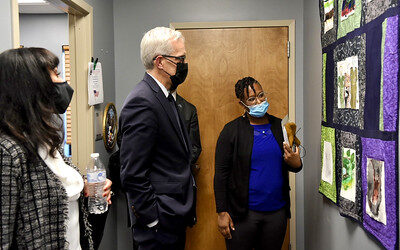
Critical OIG Report Raises Key Questions About VA’s Community Care Program
A recent VA Office of the Inspector General (OIG) audit has added more fuel to the argument around community care, finding that VA has provided little accountability over the third-party providers tasked with overseeing the department’s community care networks.
Shields Helped Implement Program to Bring Infusion Closer to VHA Patients
The idea for VA’s Close To Me Infusion Service has its roots in many places. One of them was a veteran that Jenna Shields, PharmD, BCOP, saw weekly at the Pittsburgh VAMC. Suffering from a hematologic condition, he required weekly infusions that could only be given at the medical center.
New Study Defines Clinically Important Measures of Diabetes Distress
The term “diabetes distress” is used to describe the emotional response to living with diabetes, a life-threatening illness that requires chronic and demanding self-management.
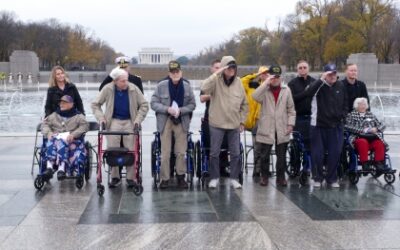
All WWII Veterans Now Eligible for No-Cost VA Care, Including Long-term Care
All World War II veterans now are eligible for no-cost VA healthcare, medical services and nursing home care, the VA announced shortly before Veterans Day.
Reduction in Mandated Military HIV Checkups Did Little Harm
Nearly a decade ago, in 2014, the U.S Air Force reduced the frequency of mandated HIV medical evaluation visits from every 6 months to every 12 months. The goal was to improve military readiness.
Sarah Krein Researches Whatever Is Necessary to Improve Veterans’ Care
Most VA researchers begin their research career because of a fascination with a certain clinical subject–a niche area usually discovered early in their studies that starts them off on a long, relatively straight, journey. Not for Sarah Krein, PhD, RN, who is interested in many subjects but none so deeply as the methodology of research itself.

VA’s Clinical Quality, Safety as Good or Better Than at Outside Care
A new review has determined that care provided in the VA healthcare system is consistently as good as or better than non-VA care in terms of clinical quality and safety.
VAMCs Struggle to Find Mental Health Staffers for Primary Care
For years, VA has been working to integrate mental healthcare into primary care and requires facilities serving at least 5,000 veterans annually to have a mental health provider available within primary care settings.
VHA Wait Times Increased Most for Blacks, Hispanics During Early Pandemic
Black and Hispanic veterans appeared to experience more barriers to accessing care than white veterans during the COVID-19 pandemic, according to a new study finding that wait time disparities increased significantly from the pre–COVID-19 period.
VA Catching Up on Rescheduling Appointments Canceled Early in the Pandemic
VA is slowly catching up on the appointments that were canceled in 2020 and 2021 due to the COVID-19 pandemic shutting down many nonessential services at VA hospitals.
Factors Linked to Severe COVID-19 Among Vaccinated, Hospitalized Veterans
Although vaccination and boosting remain the best defense against COVID-19, breakthrough infections among those vaccinated and boosted are exceedingly common.
TRICARE Prescription Drug Network Changes Ignite a Controversy
The removal of about 15,000 independent pharmacies from the TRICARE network has created an uproar.
Higher Subclinical Papillary Thyroid Cancer Rates Not Found in Middle Age
How does age affect underlying subclinical papillary thyroid cancer (PTC)? A meta-analysis of autopsy studies investigated how subclinical PTC prevalence changes over the lifetime.
VHA Data: Migraine Is a Commonly Treated Condition Among Veterans
Migraine is a commonly treated condition at the Veteran’s Health Administration (VHA), with more than half-million veterans being diagnosed during a 12-year study period, according to a recent study.

Hurricanes, Sea Level Rise Endanger Hospitals on Atlantic, Gulf Coasts
In late September, Hurricane Ian, a deadly Category 4 storm, caused widespread damage, flooding, loss of power and evacuations from hospitals and nursing homes across Cuba and the U.S. Southeast, especially Florida and South Carolina.
Community Care Approaches Half of All VA-Funded Medical Services
The VA is approaching a point where one-half of all care paid for by the healthcare system will be delivered through community providers. Outside care accounted for 44% of all VA health services last year, it said.
Expert Panel Identifies Quality Measures for High-Risk Veteran Patients
An expert panel has identified quality measures for ambulatory primary care for VHA patients who have complex care needs and are at high risk for adverse outcomes, such as hospitalization or death, according to a new study.
VA’s Stroke Care Quality, Outcomes Not Affected by COVID-19 Pandemic
The overall quality of care for stroke patients in the nation’s largest healthcare system did not decline during the COVID-19 pandemic, according to a new study.
Cost of VA-Reimbursed Community Care Is Rising Dramatically
Between FY 2017 and FY 2021, VA spending on community care rose from $10.1 billion to $21.8 billion–a 116% increase that does not factor in the costs of administering the program. At the same time, VA spending on healthcare in its own facilities grew 32%.
VA Continues Inconsistent Measurement of Veteran Wait Times for Care
On its website, VA regularly reports misleading information on how long it takes for a veteran to be seen at its facilities, according to a recent VA Inspector’s General report. That can lead to confusion among veterans and anyone researching wait times, it added.