
For men with homologous recombination repair (HRR) deficient metastatic castration-resistant prostate cancer (CRPC), PARP inhibitors can be life-prolonging therapies. Estimates of PARPi benefit in diverse patient populations are limited, however.
Cardiorespiratory Fitness Linked to Lower Risk of Male Breast Cancer
Because male breast cancer is a rare although increasingly recognized disease, there are limited data on modifiable risk factors. Not as much as known about the condition in men vs. women, where it is significantly more common.
Deployment Doesn’t Appear to Affect Hodgkin Lymphoma Survival
Unlike many types of cancer which affect older adults, classic Hodgkin lymphoma (CHL) commonly affects adolescents and young adults (AYA), including military servicemembers.
Lymphoma Survivors Often Return to Deployment When Achieving Remission
A cancer diagnosis has often been viewed as the end of a military career, particularly for servicemembers whose duties require deployment to austere or remote environments.
Rare Neurologic Syndromes Can Reveal Hidden Cancers Before Diagnosis
Neurologists rarely address hematology and oncology audiences directly, but at the Association of VA Hematology/Oncology (AVAHO) annual meeting in Austin Sept. 11-13, Tammy L. Smith, MD, PhD, made the case that they should listen more closely to what the nervous system is telling them.
Targeted Therapies Expand Options for Servicemembers, Dependents With Brain Tumors
For decades, standard care for most primary brain tumors changed little: Surgery to remove what could be extracted safely, radiation when surgery wasn’t option or following surgery and a short list of chemotherapies that were often nearly as hard on patients as the tumors themselves.
For Liver Cancer, Screening, Not Treatment, Poses the Biggest Challenge
Liver cancer treatment has been transformed over the past 30 years, with new ablation techniques, transplantation, targeted radiation and immunotherapy combinations joining what in 1995 was limited to surgery, ethanol injection or one form of embolization. Screening for the disease, by contrast, has barely changed in those three decades.
Somatic Tumor Risk Assessment Predicts Prostate Cancer Overall Survival
Even though tumor comprehensive genomic profiling (CGP) has revolutionized the care of many cancers and identifies patients for biomarker-specific therapy, it had not been available for all variations.
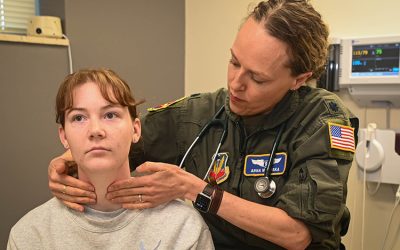
Head and Neck Cancer Rates Highest in Active-Duty Army Servicemembers Who Are Male, Older
Active-duty servicemembers who are male, enlisted in the Army and age 40 and older have the highest incidence rates of head and neck cancer, according to a recent study.
VA Researchers Featured in Dozens of Presentations at ASCO 2026
Studies address DPYD pharmacogenomics, lung cancer eligibility criteria, advance care planning, prostate cancer genomics, fatigue treatment, and more.
Gynecologic Cancer Diagnoses Rising Among Women Veterans
The number of gynecologic cancer diagnoses among women veterans and military servicemembers has nearly tripled over the past two decades, reflecting both the growing population of women who have served in the military and an increasing need to address cancer prevention, treatment and survivorship in this population, according to a new study.
Costs of Care, Oncologic Outcomes Related to Blue Light Cystoscopy at VA
Higher upfront costs vs. improved recurrence outcomes are a tradeoff when incorporating blue light cystoscopy (BLC) into nonmuscle-invasive bladder cancer (NMIBC) management, according to a new study.
Morning Dosing Appears Better for Use of ICIs in Non-Small-Cell Lung Cancer Patients
Does synchronizing immune checkpoint inhibitor (ICI) dosing with morning peaks in immune activation improve clinical outcomes?
The Introduction of Immune Checkpoint Inhibitors ‘Game Changer’ in NSCLC, Other Cancers
Presentations at the most recent European Society of Medical Oncology (ESMO) annual conference and other studies underscored the durability of immune checkpoint inhibitors (ICIs), which enable the patient’s immune cells to destroy cancer cells.
Acalabrutinib Gains Ground as Preferred BTK Inhibitor for CLL/SLL in Veterans Likely to Have Co-Morbidities
Veterans with chronic lymphocytic leukemia and small lymphocytic leukemia tend to be very different than typical clinical trial populations, presenting with diagnoses of hypertension, type 2 diabetes, chronic kidney disease, obstructive sleep apnea, and post-traumatic stress disorder, among other conditions. That is why VA’s oncology clinical pathways now prefer a first-line therapy that has demonstrated efficacy across high-risk genomic subgroups, has a lower rate of adverse effects and is compatible with the complex comorbidity profile common among older veterans.
B-Cell Lymphomas in Veterans: Expanding the Role of Next-Generation BTK Inhibition
The PACT Act marked the largest single expansion of veterans’ benefits for toxic exposure in the history of the VA. Among its most consequential provisions for hematology-oncology care, the legislation established lymphomas of any type as presumptive service-connected conditions for veterans who served in qualifying locations during the Gulf War era or in the post-September 11, 2001, conflicts.
Agent Orange Exposure Linked to Myelodysplastic Syndromes for First Time
For decades, questions have persisted about whether exposure to Agent Orange contributes to the development of blood cancers among Vietnam War veterans. New research sheds light on this issue, identifying a significant association between Agent Orange exposure and myelodysplastic syndromes (MDS), a group of bone marrow disorders that can progress to acute leukemia.

Risk of Relatively Rare Melanoma Subtype Linked to Agent Orange Exposure in Veterans
A rare melanoma skin cancer subtype which is less likely to be associated with sun exposure has now been linked to contact with Agent Orange.
Renal Cell Carcinoma Trends in California Reflect Changing Therapies, Risk Factors
PALO ALTO, CA – Despite its importance, renal cell carcinoma (RCC) tends to be understudied in the United States, according to a new study. A report in Lancet Regional Health – Americas suggested that California, with its large, racially and socioeconomically diverse...
Surgical Procedures Effective for Metastatic RCC, But Risk Factors Increase Recurrence
MADISON, WI – It is possible for patients with metastatic renal cell carcinoma (mRCC) with oligometastatic disease to achieve radiographic disease-free (M1 NED) status following cytoreductive nephrectomy and concurrent complete metastasectomy (CNCM). A new study...
Rates of CVD Rising in Metastatic RCC Patients, Especially Males
MIAMI BEACH, FL – Cancer-specific outcomes have been significantly improved by therapies treating advanced renal cell carcinoma (RCC) with distant metastasis. Those patients remain at increased risk of cardiovascular disease (CVD) and related events, however. A new...
Docetaxel Rechallenge Shows Promise in Select Patients With mCRPC
For more than two decades, docetaxel has been a cornerstone in the treatment of metastatic castration-resistant prostate cancer (mCRPC). Since its introduction in 2004, it has remained a foundational therapy, later joined by cabazitaxel—another taxane approved in 2010 for patients whose disease progresses after docetaxel.
Burden, Effects of Metabolic Dysfunction-Associated Steatotic Liver Disease Increase
As a risk factor for liver cancer, metabolic dysfunction-associated steatotic liver disease (MASLD) has become a critical public health issue. A new study suggests that measuring the burden of cirrhosis and its complications among people with MASLD is important for improving healthcare delivery.
Risk of Relatively Rare Melanoma Subtype Linked to Agent Orange Exposure in Veterans
A rare melanoma skin cancer subtype which is less likely to be associated with sun exposure has now been linked to contact with Agent Orange.
AI-informed Retinal Biomarkers Predict Risk of Onset of Hematological Malignancies
One of the challenges in early detection of hematological malignancies—and potential improvement in long-term survival—is heterogeneity in clinical presentation.
Middle East Deployment Not Linked to Increased Lymphoid Malignancy Risk
A new study found no link between deployment to the Middle East during Operation Enduring Freedom/Operation Iraqi Freedom (OEF/OIF) and a greater risk of developing lymphoid malignancies, but the authors cautioned that their study had important limitations.
‘Close to Me’ Model Enables Multiple Myeloma Therapy, Other Infusions at Home
Travel-related burdens are an ongoing issue for veterans with multiple myeloma and other specialty care patients.
Commonly Prescribed Medications Don’t Appear to Affect ICI Efficacy in NSCLC
Can commonly prescribed medications influence immune checkpoint inhibitor (ICI outcomes) in nonsmall cell lung cancer (NSCLC)?
Earlier Cancer Diagnosis Among Women Veterans Has Implications for VA Screening, Care
As more women veterans turn to the VA for their healthcare, clinicians are seeing a shift in the types of cancers treated within the system, particularly breast and gynecologic cancers. But little is known about how women receiving cancer care in the VA compare to women with similar cancers in the general population. A new study has provided some answers.
Staff Shortages Cause Extensive Delays at VA’s National Teleradiology Program
According to a recent report from the VA’s Office of the Inspector General, staffing shortages and an overreliance by VA facilities on interpreting non-priority cases is causing extensive delays in National Teleradiology Program services, leaving veterans and providers in limbo.